

Top of Foot Pain
Top of Foot Pain Treatment in Stamford
Top of Foot Pain can affect walking, standing, work, sports, shoe comfort, and daily routines. Stamford Podiatry Group, P.C. in Stamford, CT helps patients understand what may be causing symptoms, what to watch for, and which care path may fit after a podiatry exam.
What Top of Foot Pain Can Mean
Top of Foot Pain is a reason to look more closely at how the foot or ankle is handling pressure, motion, activity, footwear, and health history. The same symptom can come from different structures, so the useful question is not only what hurts, but why it keeps happening.
Top of Foot Pain can affect walking, work, sports, shoes, and daily comfort. This page explains what patients often notice, what may contribute to symptoms, and when a podiatry visit may help. At Stamford Podiatry Group, P.C. in Stamford, Dr. Rui DeMelo can connect the symptom pattern with a foot and ankle exam, shoe review, medical history, and next-step discussion.
Patterns Worth Tracking
Patients get more value from a visit when they can describe the pattern clearly. Timing, location, swelling, shoe fit, activity changes, and whether symptoms affect walking all help narrow the next step.
- Pain, pressure, swelling, skin change, shoe irritation, or walking changes related to top of foot pain.
- Symptoms that keep returning after rest, shoe changes, or basic home care.
- Trouble walking, working, exercising, or wearing normal shoes.
- Diabetes, numbness, wounds, drainage, spreading redness, or circulation concerns.
Common Causes and Risk Factors
Top of Foot Pain may be related to pressure, footwear, activity changes, foot structure, tendon or joint stress, skin or nail problems, diabetes, circulation changes, or injury. The exact cause depends on the exam.
Risk can rise when pain is ignored, when shoe pressure keeps hitting the same area, when activity increases too quickly, or when diabetes, nerve symptoms, wounds, circulation concerns, or prior injury are part of the story.
How Dr. Rui DeMelo May Evaluate It
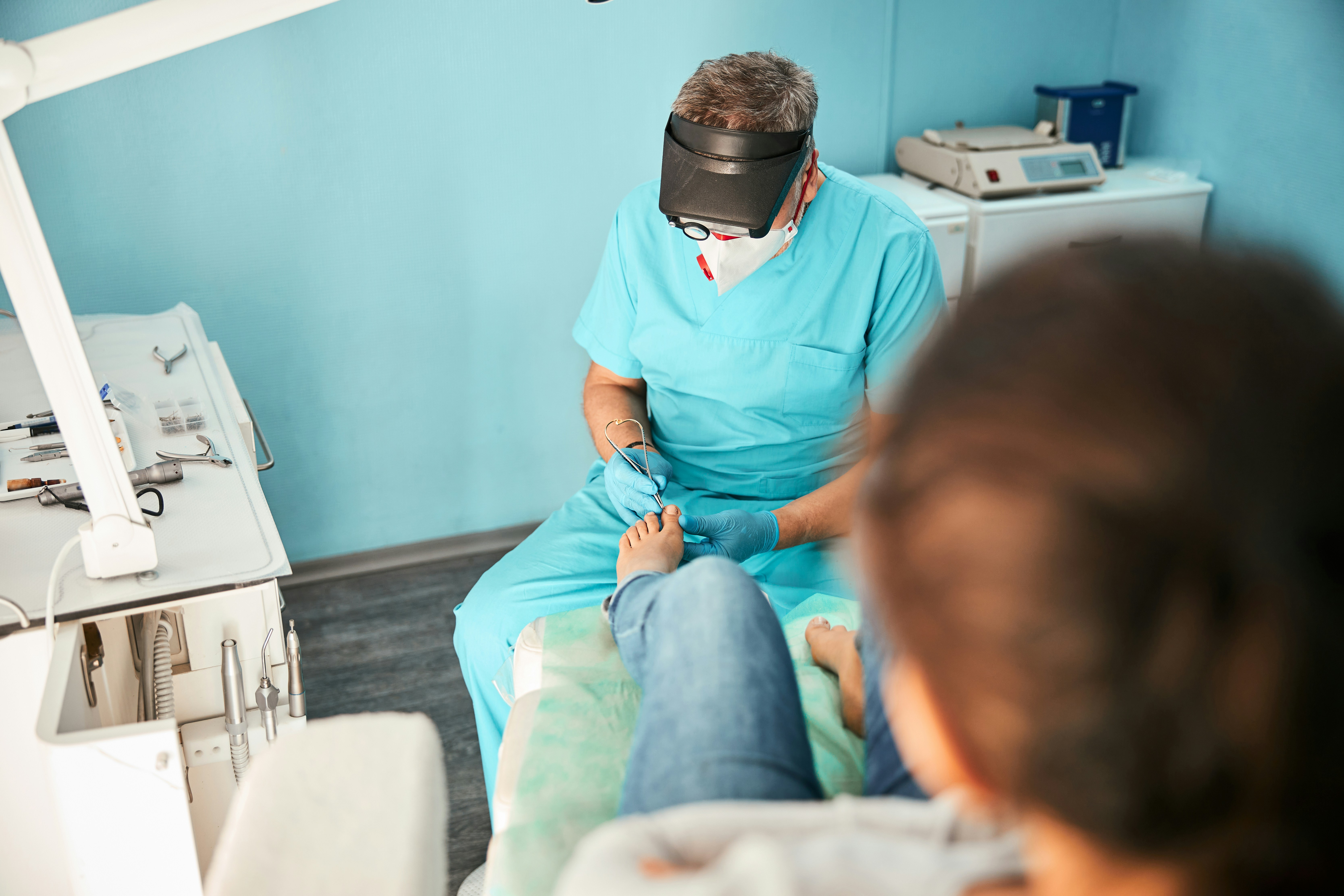
Dr. Rui DeMelo may review when symptoms started, what makes them better or worse, shoe wear, activity level, medical history, skin and nail findings, motion, strength, circulation, and tender areas. Digital X-ray or diagnostic ultrasound may be discussed when the exam suggests it would help clarify the diagnosis.
The goal is to avoid guessing from one symptom. A podiatry exam can help separate skin, nail, joint, tendon, ligament, nerve, circulation, pressure, and injury patterns before a treatment path is chosen.
Treatment Options and Care Ladder
Care often starts with practical steps such as shoe changes, padding, activity changes, stretching, bracing, offloading, or supportive inserts when those fit the diagnosis.
If symptoms continue or the exam suggests another path, the podiatrist may discuss orthotics, physical therapy, imaging, wound care, injections, device-based treatment, or surgical consultation when appropriate.
- Conservative Care may be discussed when the exam and patient goals make it a reasonable option.
- Custom Orthotics may be discussed when the exam and patient goals make it a reasonable option.
- Corticosteroid Injections may be discussed when the exam and patient goals make it a reasonable option.
Recovery, Prevention, and Follow-Up
Recovery depends on the cause, severity, health history, shoes, activity demands, and how long the symptoms have been present. Some patients improve with simple changes, while others need a structured plan and follow-up.
A good prevention plan usually focuses on pressure control, supportive footwear, activity pacing, skin and nail care, and earlier attention when the same symptom keeps returning.
Treatment Path
Care Options Patients Often Discuss
The right plan depends on the diagnosis, medical history, footwear, activity level, and whether warning signs are present.
Conservative Care
Conservative Care may be discussed when the exam and patient goals make it a reasonable option.
View pageCustom Orthotics
Custom Orthotics may be discussed when the exam and patient goals make it a reasonable option.
View pageCorticosteroid Injections
Corticosteroid Injections may be discussed when the exam and patient goals make it a reasonable option.
View pageWhat You Can Do Before Your Visit
- Wear supportive shoes and avoid pushing through pain that changes how you walk.
- Write down when symptoms started, what improves them, and what makes them worse.
- Bring the shoes you wear most often so the podiatrist can look at support and wear patterns.
When to Call
- Pain lasts, worsens, or changes the way you walk.
- Symptoms keep returning after rest, shoe changes, or basic home care.
- You have diabetes, numbness, wounds, redness, drainage, infection concerns, or circulation changes.
Related Reading
Helpful Local Foot Care Guides

Trigger Toe: Symptoms, Causes, Treatment
Read a related patient guide connected to top of foot pain and practical next steps.
Poison Ivy on Your Feet: What to Do
Read a related patient guide connected to top of foot pain and practical next steps.
Lost or Severed Toe: What to Expect
Read a related patient guide connected to top of foot pain and practical next steps.
Internal Links
Related Pages
Conservative Care
Conservative Care may be discussed when the exam and patient goals make it a reasonable option.
Open pageCustom Orthotics
Custom Orthotics may be discussed when the exam and patient goals make it a reasonable option.
Open pageRequest Appointment
Contact the clinic to ask about appointment options and next steps.
Open pageThis page is educational and does not diagnose your condition. If symptoms are severe, spreading, infected, or related to diabetes or a wound, seek medical guidance promptly.
Top of Foot Pain FAQs
When should I see a podiatrist for top of foot pain?
Call a podiatrist when top of foot pain is painful, recurring, worsening, changing how you walk, or not improving with careful home care. Call sooner if you have diabetes, numbness, a wound, drainage, redness, or circulation concerns.
What can cause top of foot pain?
Top of Foot Pain can have several possible causes, including pressure, shoes, activity changes, foot structure, skin or nail problems, tendon or joint stress, injury, diabetes, or circulation changes. An exam helps narrow the cause.
How does Dr. Rui DeMelo evaluate top of foot pain?
Dr. Rui DeMelo reviews your symptoms, medical history, shoes, activity level, and the painful area. Digital X-ray, diagnostic ultrasound, or other testing may be discussed when it helps confirm the next step.
Can top of foot pain get worse if I ignore it?
It can, depending on the cause. Pain that changes your stride, pressure that keeps building, wounds, infection signs, diabetes, or circulation concerns deserve earlier professional guidance.
Is surgery always needed for top of foot pain?
No. Many foot and ankle visits start with conservative options. Surgery is only part of the conversation when the diagnosis, severity, risks, and patient goals make it appropriate.